
Curated for the North
A catalog that assumes your winters hit thirty below.
This is not a generic national plant list with a hardiness column tacked on. It is a curated, growing library, built for cold-climate Northern gardens — every plant chosen against the kind of winter that decides whether a maple is a centerpiece or a stick by April. If a plant can't reliably hold a hard Northern winter, it doesn't make the cut.
The library grew out of one real front yard in Minnetonka, then got generalized for the northern climates around it. So it leans toward the plants that earn their spot up here: spruce that shrug off a deep freeze, hydrangeas that bloom on new wood after a hard prune, grasses that stand through snow. We're always adding more, and warmer zones are on the roadmap as the app grows with demand. Today the library knows the cold.
The seven categories
Seven shelves, weighted toward the maples.
Each plant lands in one of seven categories. The split is opinionated, not encyclopedic — it reflects what actually goes into a cold-climate yard.

Specimen Maple
A deep run of cultivars, incl. Iseli Jack Frost® hybrids like North Wind®, documented hardy to roughly −30°F where a true Japanese maple gives up.

Flowering Tree
The small-to-mid canopy trees that carry spring bloom and fall fruit — crabapple, serviceberry, and the like — sized for a front yard, not a park.

Hydrangea
Limelight, Quick Fire, Little Lime, Incrediball — the panicle and smooth types that bloom on new wood and don't care what January did to last year's stems.

Conifer
Black Hills spruce, balsam fir, microbiota — the evergreen structure that holds the plan together in winter, when everything deciduous is bare.

Shrub
The mid-layer workhorses: foundation massings, hedging, and the rounded forms that fill the gap between a tree and the ground plane.

Perennial
The herbaceous layer that comes back each spring and carries bloom through the season — the color you change without buying a new shrub.

Grass
Karl Foerster, prairie dropseed, little bluestem — ornamental grasses that move in the wind in summer and stand up through the snow all winter.
The card
What a plant card tells you.
Every plant in the library shows the same card, so you read them the same way each time. From the top:
A category badge tells you which of the seven shelves it sits on. Then the common name and, under it, the botanical name in italics, so 'Limelight' and Hydrangea paniculata 'Limelight' are never in doubt. A status pill marks whether it's a recommended addition or something already in the ground.
Below that, the part that matters most up here: four-season color swatches — spring, summer, fall, winter — read left to right, so a border that goes blank in February gives itself away. Then quick stats for bloom, sun, and zone, and a one-line placement note on where the plant actually wants to live.
 Hydrangea
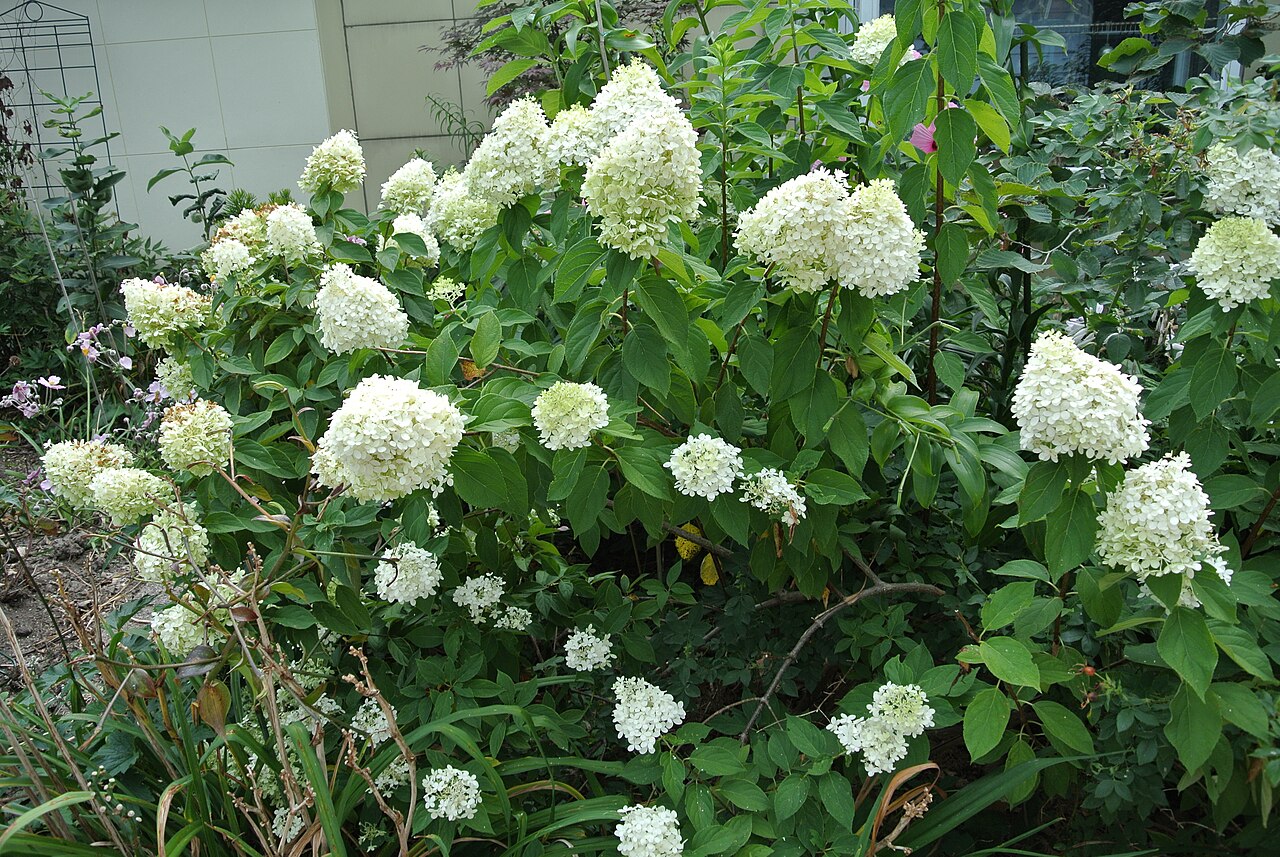
‘Limelight’ Hydrangea Tree
Sold as a "hydrangea tree" — a panicle hydrangea trained to a single trunk. Big cone blooms open lime-white in mid-late summer and age to pink. Blooms on new wood, so it's reliably hardy and forgiving to prune. A slightly underused, very elegant move beside a porch.
Photo: James Steakley, CC BY-SA 3.0.
Filtering
Filter the way you actually shop.
You rarely want the whole library at once. It narrows the way a gardener thinks: by name, by what's already on your plan, by what's recommended, by season, and by category. Try it below — tap a chip and the grid redraws live.
Search
Filter by season
Filter by category
Filter by status
Specimen Maple
North Wind® Maple
Acer × pseudosieboldianum ‘IslNW’
Specimen Maple
Arctic Jade® Maple
Acer × pseudosieboldianum ‘IsIAJ’
Flowering Tree
Red Jewel™ Crabapple
Malus ‘Jewelcole’
Flowering Tree
Apple Serviceberry
Amelanchier × grandiflora ‘Autumn Brilliance’
Hydrangea
‘Limelight’ Hydrangea Tree
Hydrangea paniculata ‘Limelight’ (standard)
Hydrangea
Quick Fire®/Pinky Winky® Hydrangea
Hydrangea paniculata (standard)
Shrub
‘Mt. Airy’ Fothergilla
Fothergilla × intermedia ‘Mt. Airy’
Shrub
Tiny Wine® Ninebark
Physocarpus opulifolius ‘SMPOTW’
Conifer
Siberian Carpet Cypress
Microbiota decussata
Conifer
Black Hills Spruce
Picea glauca var. densata
Shade Tree
Autumn Blaze® Maple
Acer × freemanii ‘Jeffersred’
Shade Tree
Existing Shade Maple
Acer sp. (existing)
Perennial
Hellebore
Helleborus Frostkiss® series
Perennial
‘Jack Frost’ Brunnera
Brunnera macrophylla ‘Jack Frost’
Grass
‘Karl Foerster’ Feather Reed Grass
Calamagrostis × acutiflora ‘Karl Foerster’
Grass
Prairie Dropseed
Sporobolus heterolepis
Specimen Maple
Coral Bark Maple
Acer palmatum ‘Sango-kaku’
Search matches common and botanical names as you type. In plan shows only what you've already placed. Recommended hides everything but the suggested additions. By season surfaces the plants doing the most work in spring, summer, fall, or winter — handy when you're hunting for winter interest. By category drops you straight onto one of the seven shelves.
The detail view
Open any plant.
Click the North Wind card below and it opens to a full profile with an icon nav-rail down the side, so you can jump straight to the part you came for: Overview, Seasons, Why this plant, and the care tabs.
Overview & Seasons
Start with the summary and the four-season color, the same swatches from the card opened up to full size.
Why this plant
The case for it in a cold-climate yard — what it does that the alternatives don't, and where it tends to disappoint.
Planting · Pruning · Watering · Design
Four care tabs for getting it in the ground, keeping it shaped, watering it in, and placing it well.
Place on plan
One click drops the plant onto your site plan at its install size, keyed into the schedule and ready to drag.
Open the North Wind® Maple to see the same detail dialog you'd see inside the app, with its icon nav-rail and Overview panel. Many plants also carry CC-licensed lifecycle photos — credited on the page, sourced from iNaturalist and Wikimedia — alongside links out to nurseries and extension offices, so you can verify a cultivar before you buy it.
The care tabs are wired up, not written yet.
The Planting, Pruning, Watering, and Design tabs exist on every plant, but the words behind them aren't done. Treat them as placeholders for now. A few of the newest plants also still lack photos and outbound links. We'd rather show you the empty shelf than fake the content — the write-ups are next on the roadmap.
 Specimen Maple
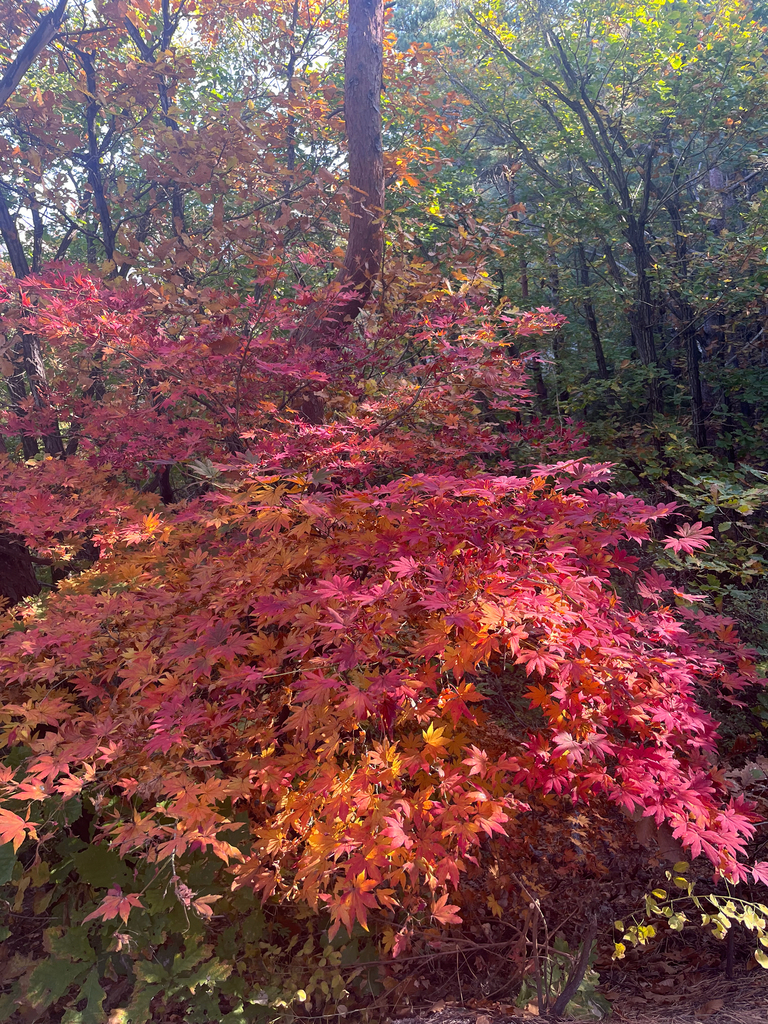
North Wind® Maple
The flagship of Iseli's Jack Frost® collection and the most proven hardy hybrid for the Upper Midwest — field-tested unblemished to −30°F. A Korean × Japanese cross (A. pseudosieboldianum × A. palmatum) that gives you the delicate palmate "open-hand" leaf and a full spring-to-fall color show with genuine zone-4 toughness. Upright vase form to ~20′ makes a real specimen tree. (Cultivar code ‘IslNW’ = "Iseli North Wind".)
Click the card to open the full detail view.
Photo: (c) wyutlai, some rights reserved (CC BY-NC), CC-BY-NC.
From shelf to plan
Find a maple, then put it on your plan.
Browse the plants — the library keeps growing as we curate more for cold climates — open the one that fits your winter, and drop it straight onto a scaled drawing of your yard. No login, nothing to install.
North Wind® Maple
Two roles: top pick for the driveway specimen, and Maple #2 on the property line.
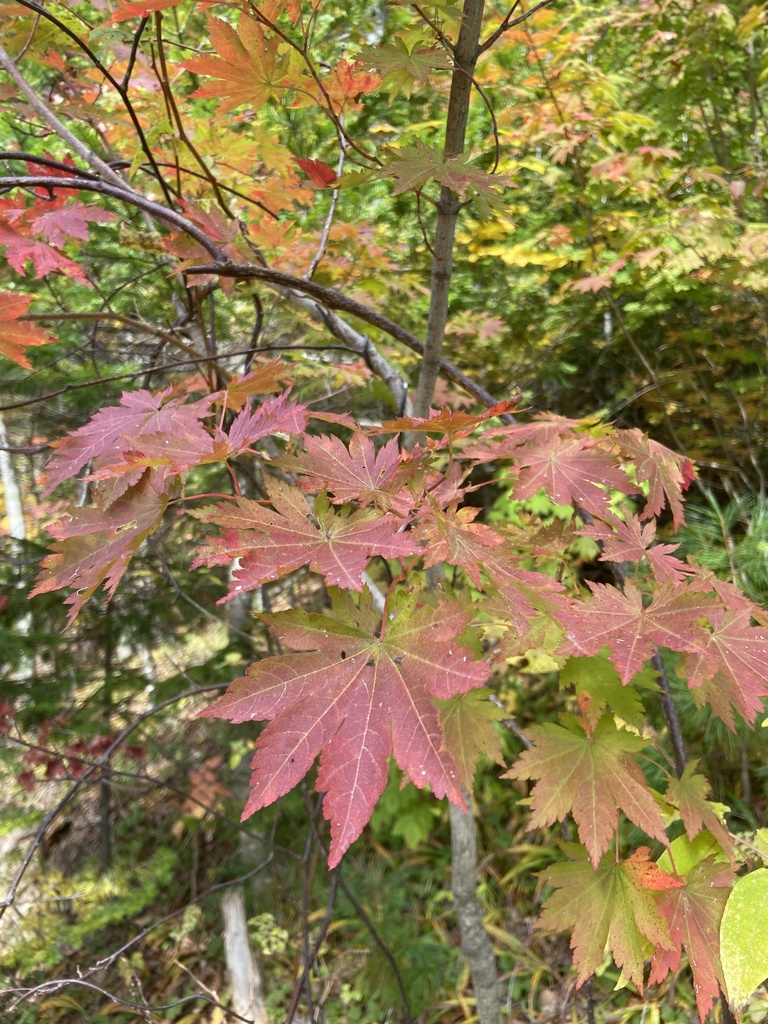
Spring. Red new growth unfurls on delicate palmate "open-hand" leaves as the upright vase form pushes its first flush.
Summer. Settles to green studded with showy pink samaras, a refined Japanese-maple look on a genuinely hardy frame.
Fall. Lights up dramatic orange and scarlet — the flagship Jack Frost® fall show that built its reputation, field-tested to about −30°F.
Winter. A bare, upright vase of fine twigs holds its shape against the snow, unbothered by deep Minnesota cold.
The flagship of Iseli's Jack Frost® collection and the most proven hardy hybrid for the Upper Midwest — field-tested unblemished to −30°F. A Korean × Japanese cross (A. pseudosieboldianum × A. palmatum) that gives you the delicate palmate "open-hand" leaf and a full spring-to-fall color show with genuine zone-4 toughness. Upright vase form to ~20′ makes a real specimen tree. (Cultivar code ‘IslNW’ = "Iseli North Wind".)
Planting. Plant in spring or early fall as your specimen tree, sited in full to part sun where you'll see the upright form; one of the toughest hardy hybrids here, so it can take a fairly open spot.
Soil. Wants moist, well-drained ground with organic matter; loosen heavy clay and avoid soggy sites, mulching to keep roots cool.
Pruning. Like all maples it bleeds sap if cut in late winter or early spring; the bleeding is harmless, but to avoid it prune in summer after the leaves harden, or in late fall. Just remove dead or crossing wood to keep the vase form open.
Fertilizing. Little needed in decent soil; topdress with compost in spring, or use a light slow-release feed only if growth is weak.
Watering. Soak deeply and regularly the first two or three years, then in dry spells; even moisture keeps the foliage from scorching on hot, windy days.
Seasonal. Mulch 3 inches (off the trunk) and water deeply before freeze-up. Wrap the young, thin-barked trunk with a mesh or spiral guard against rabbit gnawing each winter.
A real specimen — give it room to be seen, with lower companions in front for a layered look.